 Birch Bay Siding
 Board & Batten Siding, Built for Marietta's Weather
Marietta sits close enough to the water that its homes take a steady beating most inland Whatcom County properties never see: salt-laden air off the Strait, wind-driven rain that finds its way sideways into wall assemblies, and a moss season that can stretch from October well into spring. Board and batten siding has a strong, upright look that suits the mix of older cottages and newer builds in this part of Birch Bay, but the look is only half the story. The material and the installation underneath it are what decide whether that siding is still doing its job in fifteen years or peeling, cupping, and feeding moisture into the wall in five.
This page is specifically about board and batten for Marietta properties — what the local climate demands from it, what a correct installation actually involves, and how we approach the job differently than a crew installing the same siding profile forty miles inland.
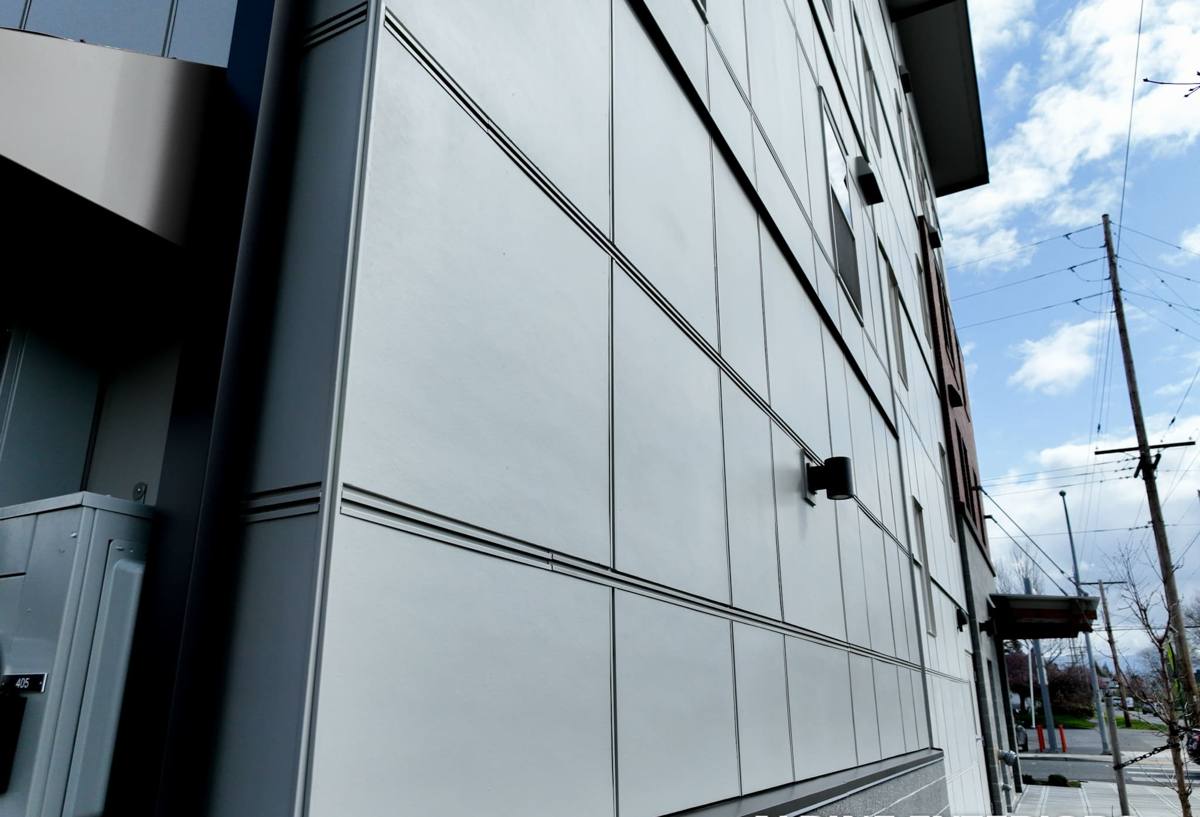
Why Board & Batten Needs Extra Attention Near the Water
Board and batten is a vertical siding pattern: wide boards or panels with narrower battens covering the seams between them. It's a classic, clean look, but the vertical orientation and the number of seams involved make it more sensitive to water management than horizontal lap siding. Every batten joint is a potential entry point for moisture if it's not fastened, flashed, and gapped correctly. In a marine environment like Marietta, that sensitivity gets tested constantly.
Salt Air
Airborne salt accelerates corrosion on anything metal — fasteners, flashing, trim connectors. Standard fasteners that hold up fine inland can start showing rust streaks and losing grip strength within a few years this close to the water. It also degrades cheaper paint films faster, which is part of why factory-applied finishes matter more here than in drier parts of the county.
Driving Rain
Birch Bay's storms don't just fall straight down — wind pushes rain horizontally into wall faces, and vertical board and batten profiles can channel that water down the battens and pool at horizontal transitions (window heads, belly bands, the bottom of the wall) if flashing details are skipped or done with caulk instead of proper metal.
Moss and Constant Damp
A long moss season means siding surfaces near roof lines, under eaves, and on north-facing walls stay damp longer than they would in a drier climate. Moss and algae growth on a porous or poorly sealed surface holds moisture against the substrate, which is exactly the condition that causes wood-based and improperly sealed engineered products to swell, delaminate, or rot at the edges.
What a Correct Board & Batten Job Actually Involves
The finished look of board and batten hides most of the work that determines how long it lasts. Here's what we consider non-negotiable on a Marietta installation:
- A drainage plane behind the siding. A weather-resistive barrier (housewrap or building paper) installed shingle-style so any water that gets past the siding drains down and out, not into the sheathing.
- A rainscreen gap. Vertical furring strips or a drainage mat behind the boards create an air gap that lets bulk water drain and lets the wall assembly dry out between storms — critical in a climate where "between storms" isn't very long.
- Correct fastener spacing and type. Board and batten relies on more individual fastening points than lap siding. We use fasteners rated for the coastal environment and follow the manufacturer's nailing schedule exactly — under-fastening leads to boards working loose in wind; over-driving cracks fiber cement.
- Proper flashing at every horizontal transition. Window and door heads, belly bands, and the base of the wall all need metal flashing, not just sealant. Sealant fails; flashing sheds water by design.
- Batten seams that shed water, not trap it. Battens are installed with the correct reveal and gap so the joint works with gravity instead of holding water against the board underneath.
- Factory-finished material wherever possible. A factory-applied, baked-on finish resists the salt air and UV exposure far better than field-applied paint, especially on the cut ends and seams that see the most weather.
Why We Only Install James Hardie for This Application
We don't install LP SmartSide, vinyl board and batten, Cemplank, Allura, or raw wood board and batten — not because those products have no merit, but because we've made a professional decision to standardize on one system we can stand behind on every job, and James Hardie's fiber cement is that system.
For a marine, high-moisture climate like Marietta specifically, the reasoning holds up:
- Fiber cement doesn't rot. Engineered wood products (like LP SmartSide) use wood strand substrate with a resin-treated surface — well-engineered, but still wood-based, meaning cut edges and any breach in the coating are vulnerable to moisture intrusion over time. Fiber cement has no wood fiber to feed rot.
- Vinyl board and batten moves with temperature. Vinyl expands and contracts significantly across our seasonal swings, and in high wind it can rattle, warp, or blow off if not installed with the exact clearances the manufacturer specifies. It also isn't repainted easily if the color fades.
- ColorPlus factory finish is built for this exposure. Hardie's ColorPlus finish is baked on in a controlled factory process and backed by its own finish warranty — a meaningfully different proposition than field-applied paint that has to cure correctly on-site in Birch Bay's damp air.
- Non-combustible. Fiber cement doesn't contribute fuel to a fire — a real consideration as wildfire risk has become a more common conversation in Washington in recent years, even in coastal counties.
- A transferable warranty that matches the investment. Board and batten is a visible, whole-house design choice. It should be backed by a manufacturer warranty structure built for exactly this kind of long-term exterior product, not a shorter or more limited term.
We install Hardie's vertical siding system — HardiePanel or HardieTrim battens over Hardie panel, depending on the reveal and look the homeowner wants — engineered as part of Hardie's HZ5 product line for the Pacific Northwest's moisture and freeze-thaw cycling.
How the Product Options Compare
| Material | Moisture Behavior in a Marine Climate | Finish Longevity | Maintenance |
|---|---|---|---|
| James Hardie Fiber Cement | Non-organic substrate, engineered for high-moisture regions (HZ5) | Factory ColorPlus finish, multi-year finish warranty | Occasional wash; repaint interval is long if ColorPlus is chosen |
| Engineered Wood (e.g. LP SmartSide) | Wood-strand substrate; cut edges and coating breaches are vulnerable | Factory-primed or coated; field-finished versions vary | Watch cut ends, seams, and ground clearance closely |
| Vinyl Board & Batten | Won't rot, but can warp, crack, or blow off in wind if misinstalled | Color is baked into the material but fades over time and can't be repainted easily | Low, but limited repair/color options long-term |
| Raw or Primed Wood | Most vulnerable to rot, especially in constant damp and moss conditions | Requires ongoing field-applied paint or stain | Highest — regular repainting and moisture checks |
Our Process on a Marietta Project
1. On-Site Assessment
We walk the property and look specifically at exposure — which walls take the most wind-driven rain, where moss and algae are already established, where existing trim or flashing has failed, and what the wall assembly looks like underneath the current siding.
2. Tear-Off and Sheathing Check
Once the old siding is off, we inspect the sheathing for hidden water damage before anything new goes up. This is often where a job either stays on schedule or reveals a problem worth fixing properly rather than covering over.
3. Weather Barrier and Rainscreen Installation
We install the housewrap and rainscreen furring correctly before a single board goes up — this step is invisible in the finished product but is the single biggest factor in how the wall performs over the next few decades.
4. Board & Batten Installation
Boards and battens are installed to Hardie's fastening schedule with correct gapping, then flashed at every window, door, and horizontal transition using metal flashing, not sealant as a primary defense.
5. Final Inspection and Walkthrough
We walk the finished job with the homeowner, point out the flashing and drainage details that are now hidden behind the siding, and go over basic care.
Cost Factors for a Marietta Board & Batten Project
Every home is different, but these are the variables that most affect the price of a board and batten job in this area:
| Factor | Why It Matters |
|---|---|
| Tear-off scope | Removing old siding and disposing of it, versus a rare re-side over existing prepared substrate |
| Sheathing condition | Hidden rot or water damage found during tear-off adds repair scope before new siding goes up |
| Wall height and complexity | Multi-story walls, dormers, and cut-ins around windows and trim add labor time |
| Trim and flashing detail | Belly bands, window casing, and corner trim all add material and installation time |
| Finish choice | Factory ColorPlus finish costs more upfront than primed material but removes the near-term repaint cycle |
| Site access | Waterfront lots, tight setbacks, or limited equipment access can affect labor time |
Maintenance in a Salt-Air, High-Moss Environment
Even with the right product and a correct install, a Marietta home benefits from a bit of seasonal attention:
- Rinse siding periodically to remove salt residue and organic buildup, especially on shaded or north-facing walls.
- Keep gutters clear so overflow doesn't run down wall faces and feed moss growth at the top of the siding.
- Trim back vegetation and tree cover that keeps siding shaded and damp longer than it needs to be.
- Check caulk and sealant at trim joints annually — sealant is a secondary defense behind flashing, and it does wear out.
- Have fastener heads and trim connectors checked periodically for early corrosion, particularly on homes closest to the water.
Why a Crew That Already Works Birch Bay Makes a Difference
Board and batten installed to a generic inland spec doesn't hold up the same way here. A crew that already works Marietta and the rest of Birch Bay knows which walls in this area typically take the worst weather, how the moss season behaves on local roof lines, and where flashing details tend to get shortcut on homes that weren't built for this exposure in the first place. That local pattern recognition is the difference between a siding job that looks right on installation day and one that's still performing correctly a decade from now, through another set of Whatcom County winters.
If you're planning a board and batten project in Marietta, we'll walk your property, look at your specific exposure and existing wall condition, and give you a straightforward assessment — no pressure, no inflated urgency. Reach out below for a free estimate.